
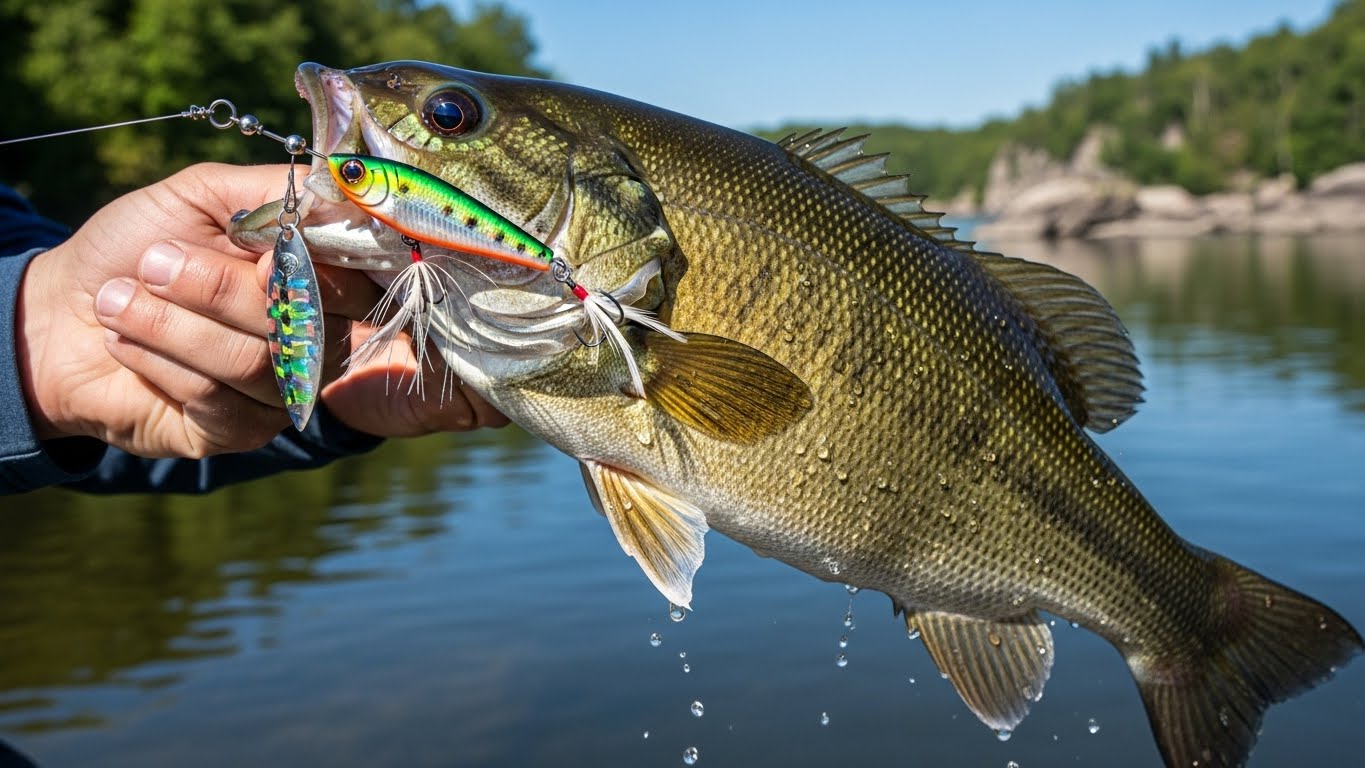
Many anglers assume that any bass bait works for smallmouth, but the reality is more nuanced. Smallmouth bass have distinct feeding habits that favor crayfish, minnows, and hellgrammites. Choosing the right bait can mean the difference between a slow day and a limit of bronze-backed fighters. This article breaks down the most effective options, from natural baits to artificial lures, based on seasonal patterns and water conditions. For a complementary read on the same theme, see Best Fishing Line for Bass: Braid, Fluoro, or Mono for 2025
Why Smallmouth Bass Anglers Across North America Rely on Specific Baits
Smallmouth bass are native to the central and eastern United States and parts of Canada, but they have been introduced to many other regions. In the Great Lakes, for example, smallmouth fisheries have evolved as invasive gobies became a primary food source. Tournament anglers in 2023 increasingly turned to goby-imitation baits, such as soft plastic jerkbaits in olive or brown hues. In rivers like the Susquehanna or Tennessee, crayfish remain the dominant forage, making tube jigs and crawfish imitations essential. The species was first described by French naturalist Bernard Germain de Lacépède in 1802, and since then, anglers have refined bait selection to match local prey. In clear, rocky lakes, finesse presentations like drop shot rigs with small finesse worms excel, especially during summer when smallmouth retreat to deeper water. Conversely, in stained or turbid conditions, spinnerbaits with willow leaf blades create flash and vibration that trigger strikes. Understanding regional differences is key: a bait that works in Michigan may fail in Texas, but the principles of matching the hatch and water clarity remain constant. A reference profile of the subject is maintained on Best Smallmouth Bass Lures: 12 Top Baits for Smallies (2026)
Comparing Live Bait, Soft Plastics, and Hard Lures for Smallmouth
Live bait remains a productive choice for smallmouth bass, particularly for beginners or when fish are finicky. Nightcrawlers are legal in most states and can be fished on a simple hook or under a bobber. However, live bait often results in deep-hooked fish, which can harm catch-and-release efforts. Soft plastics offer a versatile alternative. Tube jigs in green pumpkin or brown imitate crayfish, a top smallmouth bait, and work well when hopped along the bottom. Soft plastic crawfish lures are effective from spring through fall, especially when rigged on a Carolina or Texas rig. Ned rigs with small soft plastics have gained popularity for pressured smallmouth, as the subtle action entices strikes even in clear water. Hard lures like crankbaits in crawfish patterns trigger reaction strikes, particularly when bounced off rocks or logs. Spinnerbaits with willow leaf blades excel in clear water, while topwater lures like poppers shine during low-light dawn and dusk periods. Each category has strengths: live bait for scent and natural movement, soft plastics for finesse and imitation, hard lures for covering water and triggering aggression. The choice often depends on water clarity, depth, and fish activity level.
The Origin of Smallmouth Bass Fishing and the Evolution of Bait Selection
Smallmouth bass were first scientifically described in 1802 by French naturalist Bernard Germain de Lacépède, who named the species Micropterus dolomieu. Early anglers relied on simple live baits like worms and minnows, but by the mid-20th century, artificial lures became widespread. The development of soft plastic baits in the 1950s revolutionized fishing, and smallmouth-specific lures emerged as anglers recognized the species’ preference for crayfish. Tube jigs, originally designed for saltwater, were adapted for freshwater smallmouth in the 1970s and remain a staple. The drop shot rig, popularized in Japan in the 1990s, found a home in smallmouth fishing for deep, clear lakes. Recent studies have shown smallmouth populations declining in some northern waters due to warming, prompting conservation efforts and changes in bait regulations. In the Great Lakes, the introduction of round gobies in the 1990s shifted smallmouth diets, leading to new bait designs. Today, anglers have access to a vast array of options, but the core principle remains: present a bait that mimics the local forage in size, color, and action.
Current Trends and Future Directions for Smallmouth Bass Baits
As of 2024, smallmouth bass fishing continues to evolve. In the Great Lakes, goby-imitation baits have become dominant, with soft plastic jerkbaits and creature baits in natural tones leading tournament catches. Climate change is pushing smallmouth into deeper, cooler waters in some regions, making finesse techniques like drop shot and Ned rigs more important. Anglers are also experimenting with scent-infused soft plastics to enhance attraction in murky water. The rise of social media has accelerated the spread of new techniques, such as the “neko rig” and “wacky rig” for smallmouth. Conservation groups are promoting catch-and-release with barbless hooks and proper handling to protect declining populations. Looking ahead, bait technology may incorporate biodegradable materials and more realistic action. However, the timeless effectiveness of crayfish imitations and live bait will likely persist. For now, the best approach is to match the hatch, consider water conditions, and adapt to local forage.
| Bait Type | Best Season | Water Clarity | Key Presentation |
|---|---|---|---|
| Tube Jig | Spring to Fall | Clear to Stained | Hopped along bottom |
| Drop Shot Rig | Summer | Clear | Vertical finesse |
| Spinnerbait | Spring to Fall | Clear | Steady retrieve |
| Topwater Popper | Dawn/Dusk | Any | Walk-the-dog or pop |
| Live Nightcrawler | Year-round | Any | Under bobber or on bottom |
Frequently Asked Questions
How does a tube jig differ from a soft plastic crawfish lure for smallmouth?
A tube jig is a hollow, skirted plastic that imitates a crayfish when hopped, while a soft plastic crawfish lure has more detailed appendages and claws. Both work well, but tube jigs are more versatile for different depths and currents, whereas crawfish lures excel in rocky areas where crayfish are abundant.
Is it true that live bait is always better than artificial lures for smallmouth bass?
This is a common belief, but it is not always true. Live bait like nightcrawlers can be very effective, especially in cold water or high pressure. However, artificial lures often outperform live bait in clear water or when fish are actively feeding, as they can be presented more precisely and cover more water.
What is the current status of smallmouth bass populations in northern lakes?
Recent studies indicate that smallmouth populations are declining in some northern waters due to warming temperatures and habitat changes. Conservation efforts, including catch-and-release and habitat restoration, are underway. Anglers are encouraged to check local regulations and practice responsible fishing to help sustain populations.
Who first described the smallmouth bass species?
The smallmouth bass was first described by French naturalist Bernard Germain de Lacépède in 1802. He named it Micropterus dolomieu, and the species has since become a prized game fish across North America.
How many different bait types are commonly used for smallmouth bass fishing?
There are dozens of bait types, but the most common categories include live bait (nightcrawlers, minnows, hellgrammites), soft plastics (tube jigs, crawfish imitations, finesse worms), and hard lures (crankbaits, spinnerbaits, topwater poppers). Each has multiple variations in color, size, and action.
How Water Temperature and Seasonal Changes Affect Bait Selection
Water temperature is one of the most critical factors in smallmouth bass behavior. In early spring, when water temperatures hover between 45 and 55 degrees Fahrenheit, smallmouth are sluggish and hold near deeper wintering areas. Slow-moving baits like jigs tipped with a soft plastic trailer or live minnows work best. As temperatures rise into the 60s, smallmouth move shallow to spawn, becoming aggressive and territorial. This is prime time for tube jigs, spinnerbaits, and topwater lures. During summer, when water exceeds 70 degrees, smallmouth often retreat to deeper, cooler water, making drop shot rigs and Carolina rigs effective. In fall, as temperatures drop, smallmouth feed heavily to prepare for winter, and crankbaits that mimic shad or crayfish excel. Understanding these seasonal shifts allows anglers to adjust their bait selection accordingly, maximizing success throughout the year.
Techniques for Presenting Baits to Smallmouth Bass in Different Environments
Presentation is just as important as bait choice. In clear, rocky lakes, a natural, finesse approach is key. The drop shot rig, with the bait suspended above the bottom, allows for subtle movements that entice wary smallmouth. In rivers, current dictates presentation. Anglers often cast upstream and let the bait drift naturally downstream, keeping a tight line to feel strikes. Tube jigs are particularly effective when hopped along the bottom in a stop-and-go retrieve. For stained or murky water, vibration and noise become crucial. Spinnerbaits with Colorado blades produce thumping vibrations, while crankbaits with rattles attract fish through lateral line detection. Topwater lures require a different touch: a steady walk-the-dog retrieve or a pop-and-pause cadence can trigger explosive strikes. In deep water, vertical jigging with heavy spoons or blade baits is effective. Each environment demands a tailored approach, and successful anglers adapt their retrieve speed, depth, and action to match conditions.
Selecting the Right Color and Size for Smallmouth Bass Baits
Color and size are often overlooked but can make a significant difference. In clear water, natural colors like green pumpkin, watermelon, and brown match crayfish and other forage. In stained water, brighter colors like chartreuse, orange, or white increase visibility. At night or in very dark water, black or dark blue baits create a strong silhouette. Size should match the local forage: in waters with abundant small crayfish, a 3-inch tube jig is ideal; where larger gobies or shad are present, 4- to 5-inch baits work better. During the spawn, larger baits can trigger aggression, while in post-spawn or cold water, downsizing often gets more bites. Many anglers carry a variety of colors and sizes and experiment until they find what works on a given day. Observing what smallmouth are feeding on—by checking stomach contents or watching for surface activity—can guide color and size choices.
Conservation and Ethical Considerations When Choosing Baits
Responsible angling includes considering the impact of bait choice on fish health and the ecosystem. Live bait, especially non-native species, can introduce diseases or outcompete native forage. Many states prohibit the use of live bait in certain waters to protect native species. Artificial lures reduce the risk of deep hooking and allow for easier catch-and-release. Using barbless hooks or crimping barbs minimizes injury. When using live bait, anglers should avoid releasing unused bait into the water. Additionally, handling smallmouth with wet hands and supporting their weight properly helps ensure survival after release. Conservation groups advocate for using single hooks instead of treble hooks to reduce damage. By choosing baits and practices that prioritize fish welfare, anglers help sustain smallmouth populations for future generations.
How Water Temperature and Seasonal Changes Affect Bait Selection
Water temperature is one of the most critical factors in smallmouth bass behavior. In early spring, when water temperatures hover between 45 and 55 degrees Fahrenheit, smallmouth are sluggish and hold near deeper wintering areas. Slow-moving baits like jigs tipped with a soft plastic trailer or live minnows work best. As temperatures rise into the 60s, smallmouth move shallow to spawn, becoming aggressive and territorial. This is prime time for tube jigs, spinnerbaits, and topwater lures. During summer, when water exceeds 70 degrees, smallmouth often retreat to deeper, cooler water, making drop shot rigs and Carolina rigs effective. In fall, as temperatures drop, smallmouth feed heavily to prepare for winter, and crankbaits that mimic shad or crayfish excel. Understanding these seasonal shifts allows anglers to adjust their bait selection accordingly, maximizing success throughout the year.
Techniques for Presenting Baits to Smallmouth Bass in Different Environments
Presentation is just as important as bait choice. In clear, rocky lakes, a natural, finesse approach is key. The drop shot rig, with the bait suspended above the bottom, allows for subtle movements that entice wary smallmouth. In rivers, current dictates presentation. Anglers often cast upstream and let the bait drift naturally downstream, keeping a tight line to feel strikes. Tube jigs are particularly effective when hopped along the bottom in a stop-and-go retrieve. For stained or murky water, vibration and noise become crucial. Spinnerbaits with Colorado blades produce thumping vibrations, while crankbaits with rattles attract fish through lateral line detection. Topwater lures require a different touch: a steady walk-the-dog retrieve or a pop-and-pause cadence can trigger explosive strikes. In deep water, vertical jigging with heavy spoons or blade baits is effective. Each environment demands a tailored approach, and successful anglers adapt their retrieve speed, depth, and action to match conditions.
Selecting the Right Color and Size for Smallmouth Bass Baits
Color and size are often overlooked but can make a significant difference. In clear water, natural colors like green pumpkin, watermelon, and brown match crayfish and other forage. In stained water, brighter colors like chartreuse, orange, or white increase visibility. At night or in very dark water, black or dark blue baits create a strong silhouette. Size should match the local forage: in waters with abundant small crayfish, a 3-inch tube jig is ideal; where larger gobies or shad are present, 4- to 5-inch baits work better. During the spawn, larger baits can trigger aggression, while in post-spawn or cold water, downsizing often gets more bites. Many anglers carry a variety of colors and sizes and experiment until they find what works on a given day. Observing what smallmouth are feeding on—by checking stomach contents or watching for surface activity—can guide color and size choices.
Conservation and Ethical Considerations When Choosing Baits
Responsible angling includes considering the impact of bait choice on fish health and the ecosystem. Live bait, especially non-native species, can introduce diseases or outcompete native forage. Many states prohibit the use of live bait in certain waters to protect native species. Artificial lures reduce the risk of deep hooking and allow for easier catch-and-release. Using barbless hooks or crimping barbs minimizes injury. When using live bait, anglers should avoid releasing unused bait into the water. Additionally, handling smallmouth with wet hands and supporting their weight properly helps ensure survival after release. Conservation groups advocate for using single hooks instead of treble hooks to reduce damage. By choosing baits and practices that prioritize fish welfare, anglers help sustain smallmouth populations for future generations.
How Water Temperature and Seasonal Changes Affect Bait Selection
Water temperature is one of the most critical factors in smallmouth bass behavior. In early spring, when water temperatures hover between 45 and 55 degrees Fahrenheit, smallmouth are sluggish and hold near deeper wintering areas. Slow-moving baits like jigs tipped with a soft plastic trailer or live minnows work best. As temperatures rise into the 60s, smallmouth move shallow to spawn, becoming aggressive and territorial. This is prime time for tube jigs, spinnerbaits, and topwater lures. During summer, when water exceeds 70 degrees, smallmouth often retreat to deeper, cooler water, making drop shot rigs and Carolina rigs effective. In fall, as temperatures drop, smallmouth feed heavily to prepare for winter, and crankbaits that mimic shad or crayfish excel. Understanding these seasonal shifts allows anglers to adjust their bait selection accordingly, maximizing success throughout the year.
Techniques for Presenting Baits to Smallmouth Bass in Different Environments
Presentation is just as important as bait choice. In clear, rocky lakes, a natural, finesse approach is key. The drop shot rig, with the bait suspended above the bottom, allows for subtle movements that entice wary smallmouth. In rivers, current dictates presentation. Anglers often cast upstream and let the bait drift naturally downstream, keeping a tight line to feel strikes. Tube jigs are particularly effective when hopped along the bottom in a stop-and-go retrieve. For stained or murky water, vibration and noise become crucial. Spinnerbaits with Colorado blades produce thumping vibrations, while crankbaits with rattles attract fish through lateral line detection. Topwater lures require a different touch: a steady walk-the-dog retrieve or a pop-and-pause cadence can trigger explosive strikes. In deep water, vertical jigging with heavy spoons or blade baits is effective. Each environment demands a tailored approach, and successful anglers adapt their retrieve speed, depth, and action to match conditions.
Selecting the Right Color and Size for Smallmouth Bass Baits
Color and size are often overlooked but can make a significant difference. In clear water, natural colors like green pumpkin, watermelon, and brown match crayfish and other forage. In stained water, brighter colors like chartreuse, orange, or white increase visibility. At night or in very dark water, black or dark blue baits create a strong silhouette. Size should match the local forage: in waters with abundant small crayfish, a 3-inch tube jig is ideal; where larger gobies or shad are present, 4- to 5-inch baits work better. During the spawn, larger baits can trigger aggression, while in post-spawn or cold water, downsizing often gets more bites. Many anglers carry a variety of colors and sizes and experiment until they find what works on a given day. Observing what smallmouth are feeding on—by checking stomach contents or watching for surface activity—can guide color and size choices.
Conservation and Ethical Considerations When Choosing Baits
Responsible angling includes considering the impact of bait choice on fish health and the ecosystem. Live bait, especially non-native species, can introduce diseases or outcompete native forage. Many states prohibit the use of live bait in certain waters to protect native species. Artificial lures reduce the risk of deep hooking and allow for easier catch-and-release. Using barbless hooks or crimping barbs minimizes injury. When using live bait, anglers should avoid releasing unused bait into the water. Additionally, handling smallmouth with wet hands and supporting their weight properly helps ensure survival after release. Conservation groups advocate for using single hooks instead of treble hooks to reduce damage. By choosing baits and practices that prioritize fish welfare, anglers help sustain smallmouth populations for future generations.